Travelling and Survival

Travel for the New France pioneers (17th and 18th centuries) was almost entirely dictated by the harsh Canadian geography and climate. It was an adaptation of Indigenous methods mixed with European technology.

Here are the key elements: 

Summer Travel: The Water Highways

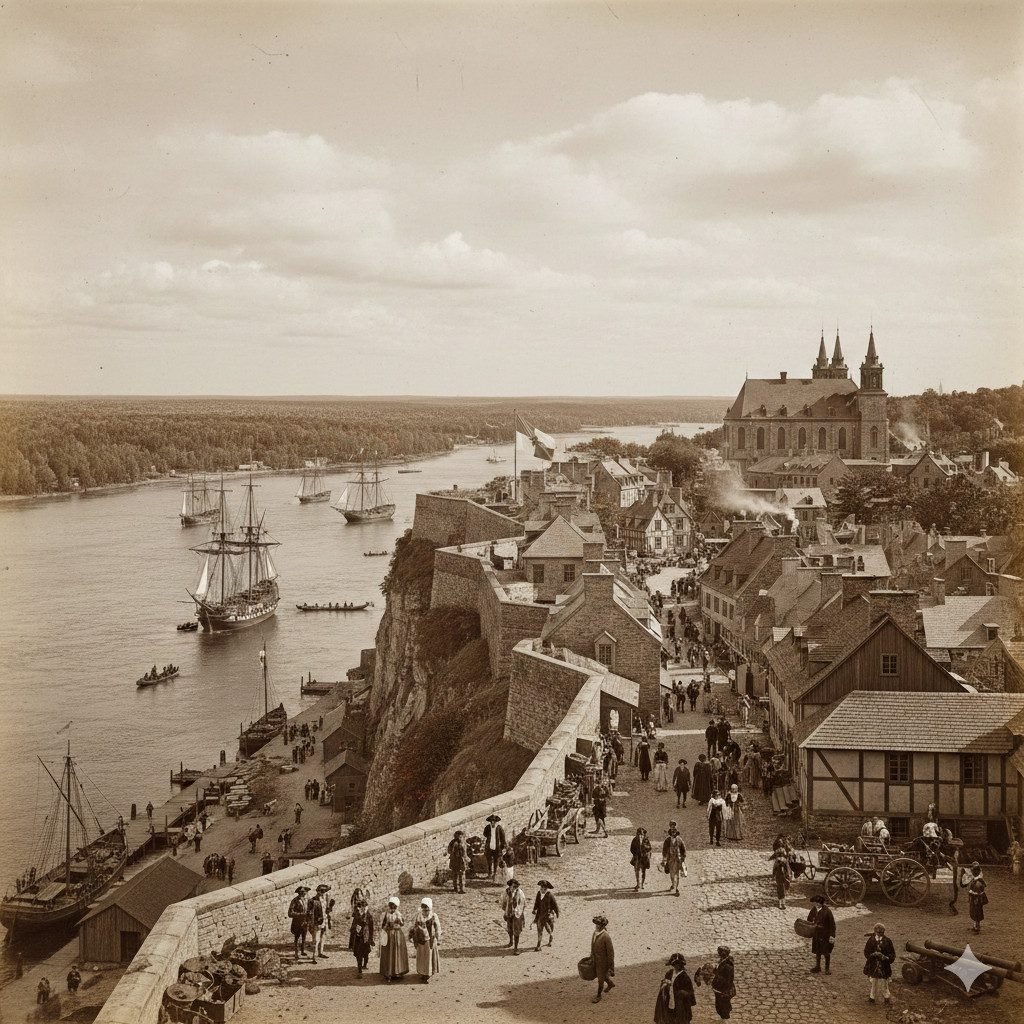
In the warmer months, waterways—especially the St. Lawrence River and its tributaries—were the absolute lifelines of the colony, serving as the main “roads” for trade, communication, and settlement.

  • Canoe (Canot): This was the most crucial vessel for pioneers, explorers, and especially the voyageurs (fur traders). French settlers quickly adopted the birch-bark canoe from Indigenous peoples, as it was:

    • Lightweight: Essential for portaging (carrying the vessel and goods) around rapids and between watersheds.

    • Maneuverable: Excellent for navigating shallow rivers and remote lakes.

  • Sailing Ships/Bateaux: Larger European-style boats (bateaux) and sailing ships were used for:

    • Transatlantic Travel: Bringing immigrants and goods from France (ports like La Rochelle and Bordeaux) to Québec and Montréal.

    • Coastal/River Commerce: Transporting large amounts of cargo and settlers between the major ports along the St. Lawrence River.

  • Walking/Foot-Travel: Though less efficient, walking was the only way to cover short distances off the rivers before roads were established.

Winter Travel: Adapting to Snow and Ice

When the rivers and lakes froze for four to six months, travel didn’t stop—it simply shifted, requiring the adoption of specialized Indigenous technologies.

  • Sleds and Sleighs (Tirasse/Traîneau):

    • Toboggans: Initially, simple Indigenous sledges (toboggans) were used for pulling supplies over the snow.

    • Horse-Drawn Sleighs: By the mid-17th century, horses and oxen were hitched to  large modified sleds, which became the preferred method for transporting people and goods. They could even travel directly on the frozen river surface, which served as a perfectly smooth, temporary “highway.”

  • Snowshoes (Raquettes): These were a vital Indigenous innovation adopted by the French for foot travel. They allowed pioneers, coureurs des bois, and soldiers to move quickly and efficiently over deep snow, covering several kilometres in a single day for hunting or reconnaissance.

  • Carriole: A more comfortable, often luxurious, horse-drawn sleigh used by the upper class for fast winter travel.

Land Routes

Before the 18th century, land infrastructure was nearly nonexistent.

  • Chemin du Roy (King’s Road): The first true major road was the Chemin du Roy, built in the 1730s. It linked the principal cities of Québec and Montréal and was a massive improvement, though travel was still slow by modern standards.

  • Horse and Carriage Travel: Horse-drawn carriages and carts were used for land travel once trails or roads became available, mainly for transporting goods and families efficiently overland between settlements.

The successful expansion of New France was fundamentally dependent on the pioneers’ willingness to abandon traditional European methods and embrace the transportation technologies of the First Nations—especially the canoe and snowshoe.

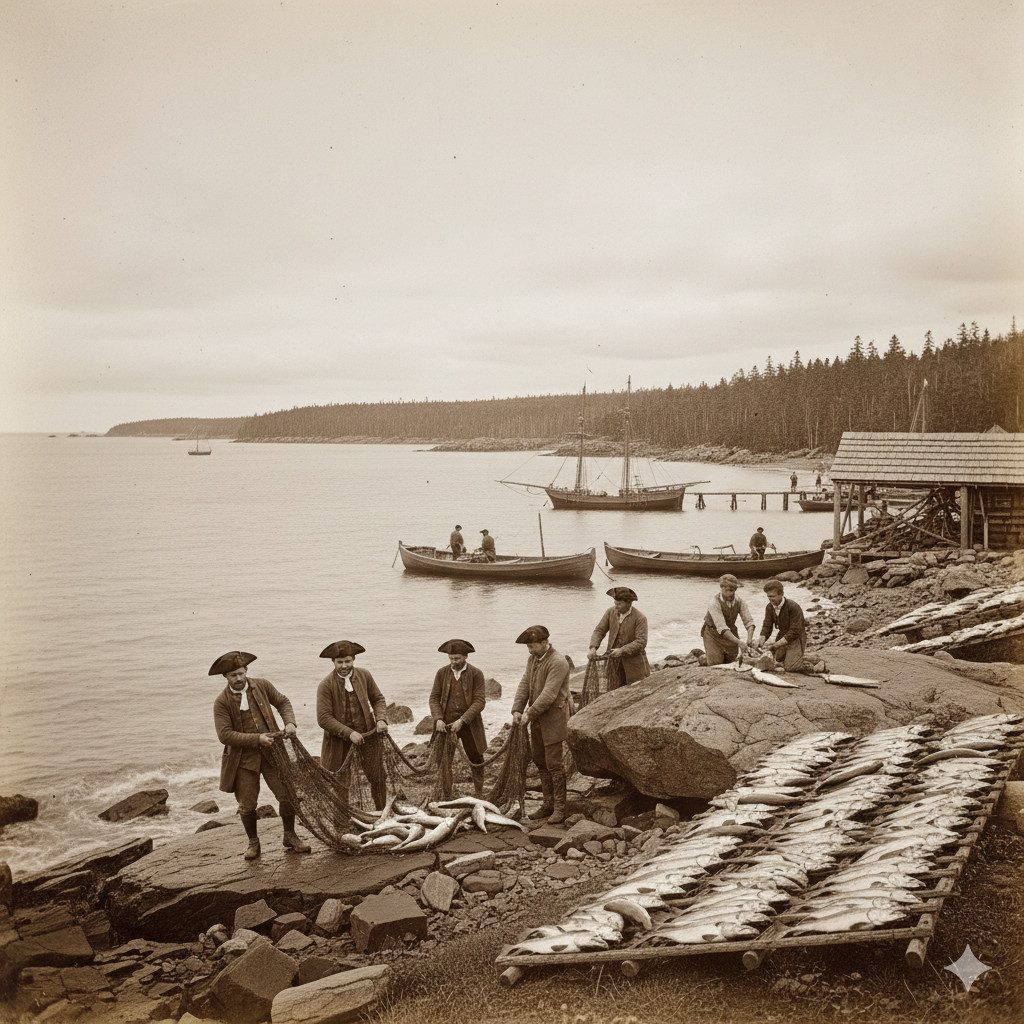
Ice fishing was an important survival strategy for the early pioneers of New France. In the long, harsh Canadian winter, fishing through the ice became a vital source of protein, especially before European farming techniques were fully established.
Here’s how ice fishing fit into the life of the early French-Canadian settlers:

Adaptation from Indigenous
Methods

gemini generated image qgyxyqqgyxyqqgyx

The pioneers learned and adopted ice fishing techniques directly from the First Nations—particularly the Algonquian and Huron-Wendat peoples. Indigenous communities had used these methods for millennia as a crucial part of their winter food supply. 

  • Tools: Settlers would use the Indigenous knowledge to chip holes in the ice, often using modified spears (nigogue or harpoon-like tools) and lines, sometimes luring fish to the hole using wooden decoys.

     
  • Location: Settlers and fur traders quickly learned where to find fish under the ice in the St. Lawrence River, its tributaries, and the Great Lakes.

The Famous “Winter Fish”

gemini generated image 2nl94r2nl94r2nl9


Documentation from the earliest French pioneers confirms that fishing continued through the winter, often focusing on a specific fish:

  • Atlantic Tomcod: This small fish, known locally as poissons des chenaux (channel fish) or “winter fish,” historically ran up the St. Lawrence River and its tributaries during the coldest months. They were a reliable and abundant winter food source.

     
  • Preservation: Fish caught in the winter could be easily preserved through salting, smoking, or simply freezing outside, helping families survive until the spring thaw.

Early Structures

gemini generated image pdroqbpdroqbpdro

While the elaborate, comfortable fishing shacks you see today are a modern development (gaining popularity in the mid-20th century), early fishing required some basic shelter from the wind and extreme cold.

  • Basic, small structures or simple windbreaks were used to allow fishermen to tend to their lines and nets on the ice, especially at reliable spots.


In short, for the New France pioneers, ice fishing was not just a pastime; it was a necessary skill learned from Indigenous neighbors that was critical to their survival and a reliable supplement to their diet during the long, inaccessible winter months.
Once again Gemini.ai was helpful in researching this page.

Scroll to Top